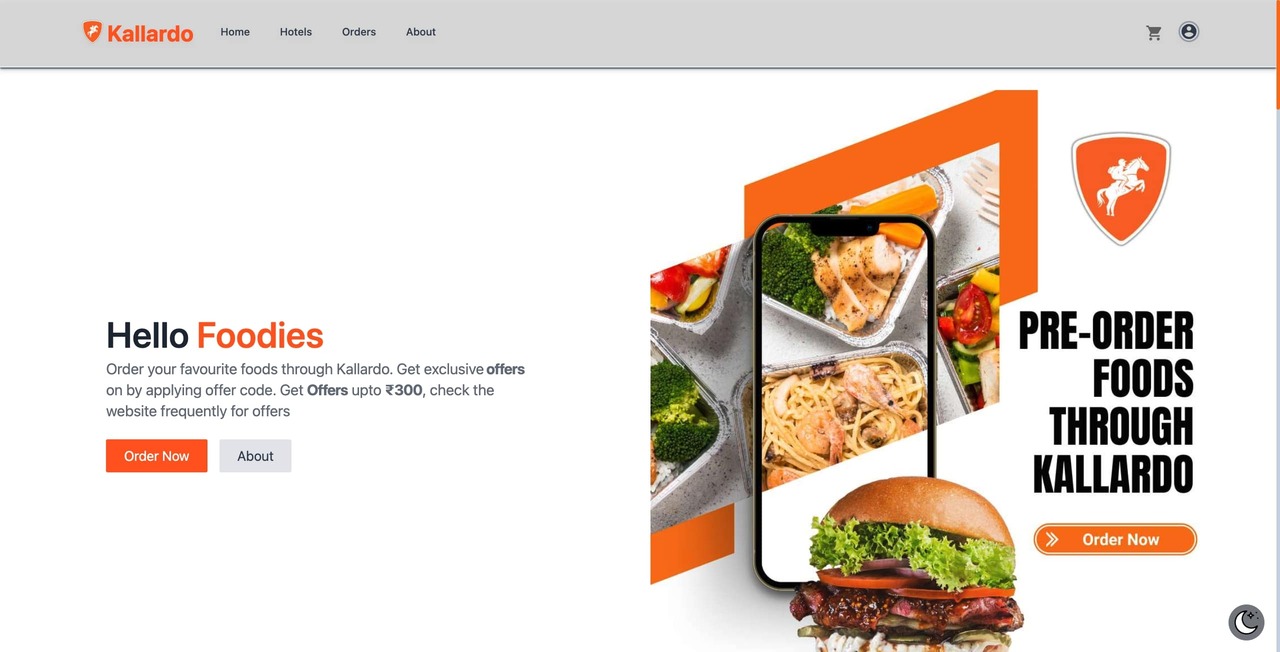
Food ordering platform for web and Android
Kallardo
A food ordering and restaurant management platform I founded and built from scratch, with a web app, an Android app and a sub-1 MB Android Lite app.
Service
The right rendering for every page: server-side or static for pages that must rank, client-side for rich, private dashboards.
Approach
Where a page is rendered decides how fast it appears and whether search engines can read it. I pick the right strategy for each page: static or server-side rendering for public pages that must rank, and client-side rendering for private, highly interactive screens.
This site is a fully static export, so every page is plain HTML on a CDN, while the SAS Builders dashboard and Kallardo's admin, restaurant and delivery dashboards run as client-side apps where interactivity matters more than search.
Food ordering platform for web and Android
A food ordering and restaurant management platform I founded and built from scratch, with a web app, an Android app and a sub-1 MB Android Lite app.

Website for an IT training institute
A website for Merjer Softech, a coaching and IT training institute in Nagercoil offering CBSE tutoring and programming courses.

This website and the version before it
My personal portfolio, in two versions. V2 is the site you are on, a static Next.js export styled with Tailwind CSS.

4 November 2026
Server-side vs client-side rendering explained: how each works, what it means for SEO and speed, and how to pick the right one for every page of your site.
With server-side rendering the server sends a complete HTML page. With client-side rendering the browser receives a JavaScript bundle and builds the page itself. SSR is better for SEO and first load; CSR suits interactive apps.
No. Next.js lets each page use the strategy that suits it, so you can have static marketing pages, server-rendered listings and a client-side dashboard in one project.
Let's work together
Get in touch with me to discuss how I can help bring your ideas to life.